
Everyone seems to have a soft spot for Who Dares Wins, the good news for you is that it’s coming back and looking for contestants. Go for it!
Our Eurovision songs revealed this week
And You Decide with Mel Giedroyc is on BBC4 on Friday at 7:30pm. Looks like there are still tickets left at the O2 Forum if you fancy spending £40.
Ken Bruce is premiering each song on his Radio 2 show, although if you don’t fancy that they’re also going to be on the BBC Eurovision blog once they’ve been played.
In other news Matt Allwright has been announced as the host of the BBC’s new upcoming daytime quiz The Code. The Code sees variable teams of 1-3 answer questions in order to find the code to a safe which starts with £3,000 and increases by £500 every time a team fails. 25 x 45 minute episodes in the order, we liked Matt Allwright on The Exit List so we’ll see.
Also For What It’s Worth has been recommissioned which is good news I think because I think it had something. The press release suggests 23 episodes, which is a strange number.
Show Discussion: Airmageddon
 Saturday/Sunday,
8:25am (repeated 3:20pm),
CBBC
Press release
Well it had to happen eventually, a Robot Wars-esque gameshow about drones, and it’s no accident that it might look and feel Robot Wars-esque given that this too apparently comes from original TV RW-supremo Steve Carsey. It even has house drones, apparently.
Will Best and Rachel Stringer guide four teams through elimination rounds testing flying skills ending in a head to head laser based dogfight.
The clips we’ve seen make it look very cool, somewhere between Metropolis and Tron, but bearing in mind we’re likely to be much older than the intended audience will it stand up to repeated viewing? Watch it and let us know what you think in the comments.
Royaume-Uni deux cent soixante-seize points – new Eurovision voting
This has been one of the bigger stories today, the Eurovision scoring system is having a massive overhaul. Rather than having countries mark in the Strictly Come Dancing style, where the jury vote and the popular vote are ranked separately and combined to give a final vote tally, this year each country will give two separate sets of points – a jury vote and a televote – effectively doubling the number of points on offer. In theory this means that influence is still 50/50 between juries and televoters, but it’s calculated in a different, apparently fairer way. A song that does well with the jury but bombs with the televote, or vice versa, should now be able to pick up points where previously the disparity may have left it outside a country’s top ten picking up nothing.
How will this be represented on the night? The Eurovision site suggests that the jury votes will be read out 1-12 in the traditional manner. After all the juries have declared the points earned from all the country’s televotes combined will be revealed starting with the song which scored the least, so if Germany let’s say scored 7 points in the French televote, 5 points in the Belgian televote and 1 pt from the UK televote they would get 13 points added to their jury score to get their final total, whereas a country that does very well, like the UK, might get a big wodge like 276 points just added to their jury score towards the end. You won’t have to sit through all the countries declaring again, it’ll all come at once.
Why do this? The official line is that it will make the voting more exciting on the night. Previously, even with algorithms, there will always be a pull-away point where the winning song is the clear winner in the voting. Using the patented Big Wodge system nobody will quite sure until right up to the end.
Why full jury results and not full televote results when that’s likely to be of more interest? Fair question. My take is that having the night finish on the whim of half a billion people is more dramatic than finishing the night on the whims of around 200 jury members. The televote scoring will still be available online after the show.
Sweden’s Melodifestivalen (their Eurovision selection process) has successfully used variations of the Big Wodge system for almost twenty years, but it works slightly differently to how it’s being used for Eurovision. Under their current rules the televote is converted into a percentage and songs receive that percentage of the points (equal to the amount of points the juries can give). Of course this couldn’t work like for like for Eurovision where countries can’t vote for themselves and each country has a different population.
Tl;dr?
For anyone confused by the new Eurovision voting system, I've put together this handy diagram. pic.twitter.com/ruTrx5L1tQ
— Jonathan Cresswell (@JonathanEx) February 18, 2016
The Money
Tuesday 16th March, Cambridge Guildhall
We don’t normally review contemporary theatre at the The Bar, but this might be of interest to some of you.
In The Money you choose to buy a ticket as a Benefactor (donating £10 minimum) or as a Silent Witness. Benefactors get to play the game whilst silent witnesses, as their name suggests, witness silently. All the money collected by the benefactors is collected into a pot, and once sat down and the concept explained by the steward (the rules are not read out, a sheet is there for one of the Benefactors to read out once the game begins) a clock begins – it sounds like two hours is the usual but it was 90 minutes in this performance.
The object, quite simply is for the Benefactors to unanimously decide what to with the pot (£210 this evening) and to decide that at the end of the period. If they cannot decide the money will rollover to the next event (the rules point out that this should not be considered a failure).
This starts off slowly, the rules are read out, someone will put forward an idea, it’ll get shouted down, someone will put forward a better idea, everyone will almost agree to it, and then everyone realises there’s still 75 minutes until the close so other avenues of discussion open up, so that fifteen minutes later nobody can really agree on anything at all – forced nature of the time limit is quite clever.
What’s quite interesting is that if the video is anything to go by, when you give a group of people this one single decision most groups will have the same arguments and suggest the same or similar ideas. Alturistic or hedonistic? The individual or the group? Should we just give it to one of us in a lottery? Should we just spend it on the lottery? Which charity is more worthy? Local or international?
I thought it was a shame that all the Benefactors (and indeed the Silent Witnesses) were self-selecting middle-class poncy types, if you only ever see the show once that’s fine but if you see it multiple times I think you’d yearn for some different points of view and arguments. Or maybe they’d have the same arguments. And maybe that’s the point.
One quite interesting fillip is that Silent Witnesses are expected to be silent, but at any time they can ring a bell, throw a tenner into the pot and become a Benefactor if they don’t like the way the conversation’s going, and this happened three times last night in the final ten minutes – one because he thought there would be a Mole (or something, see below), someone else who wanted to be part of the “if we can’t decide we’ll just have a draw for it” lottery suggested, and a third who decided they wanted in on the draw as well except half the ballots had been drawn by that point messing the whole thing up with not enough time to redo everything. On the flipside Benefactors can opt to bang a gong and become a Silent Witness if they want to not have to come to a decision.
Doing the show in real life civic places is meant to bring home the idea that the whole thing is meant as a sort of mirror of real life financial decisions. Unfortunately there’s one big downside to this, especially at the Guildhall, and that’s the acoustics are terrible, sadly. My hearing’s not the best, but it was really hard to make out some of the discussion, we’re probably only sitting two metres away from (albeit a large) discussion area and the combination of non-actors who don’t really project and large echo-y room made it quite difficult to follow, especially in the early stages before people start getting animated.
The group did not come to a decision at the close of play so the money (£240+ by my reckoning) should roll forward to the next event, part of the Hull Heads Up Festival, on March 10th.
Show Discussion: Masterpiece with Alan Titchmarsh
 Weekdays, 3pm,
ITV
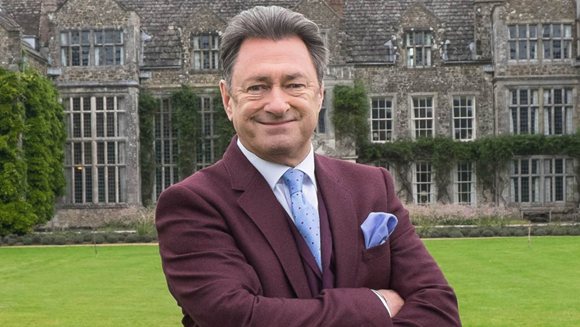
We forgot this started on Monday and we haven’t actually watched it yet. Still, Alan Titchmarsh (who according to this press release, came up with the idea himself) invites teams round various stately homes to play various antique based games, winners of which get to go to the Masterpiece Gallery to try and pick out high value objects in a line-up, and whoever can pick the most high-value objects can win a grand.
This comes hot on the heels of the BBC’s For What It’s Worth with Fern Britton which we thought was quite clever and watchable, the heady mixture of general knowledge quiz and objects valuation working as a sort of Antiques Bullseye. Will the heavier emphasis on antiques work in Alan’s favour? Let us know what you think in the comments.